EF 157 Glider Design Project


My 5-person team is designing a self-powered glider for our engineering fundamentals class competition. It launches from a 28-foot platform and has to land on a target about 18 feet away. Sending balls through hoops earns bonus points, but we chose to put everything into an accurate landing.

Our design is a small cart, 3D printed in PLA, with a large square canopy for a wing. A mousetrap drives the wheels to roll it off the platform, and the canopy gives it lots of lift and drag so it comes down slowly and predictably. Key parts are adjustable so we can tune it as we test.

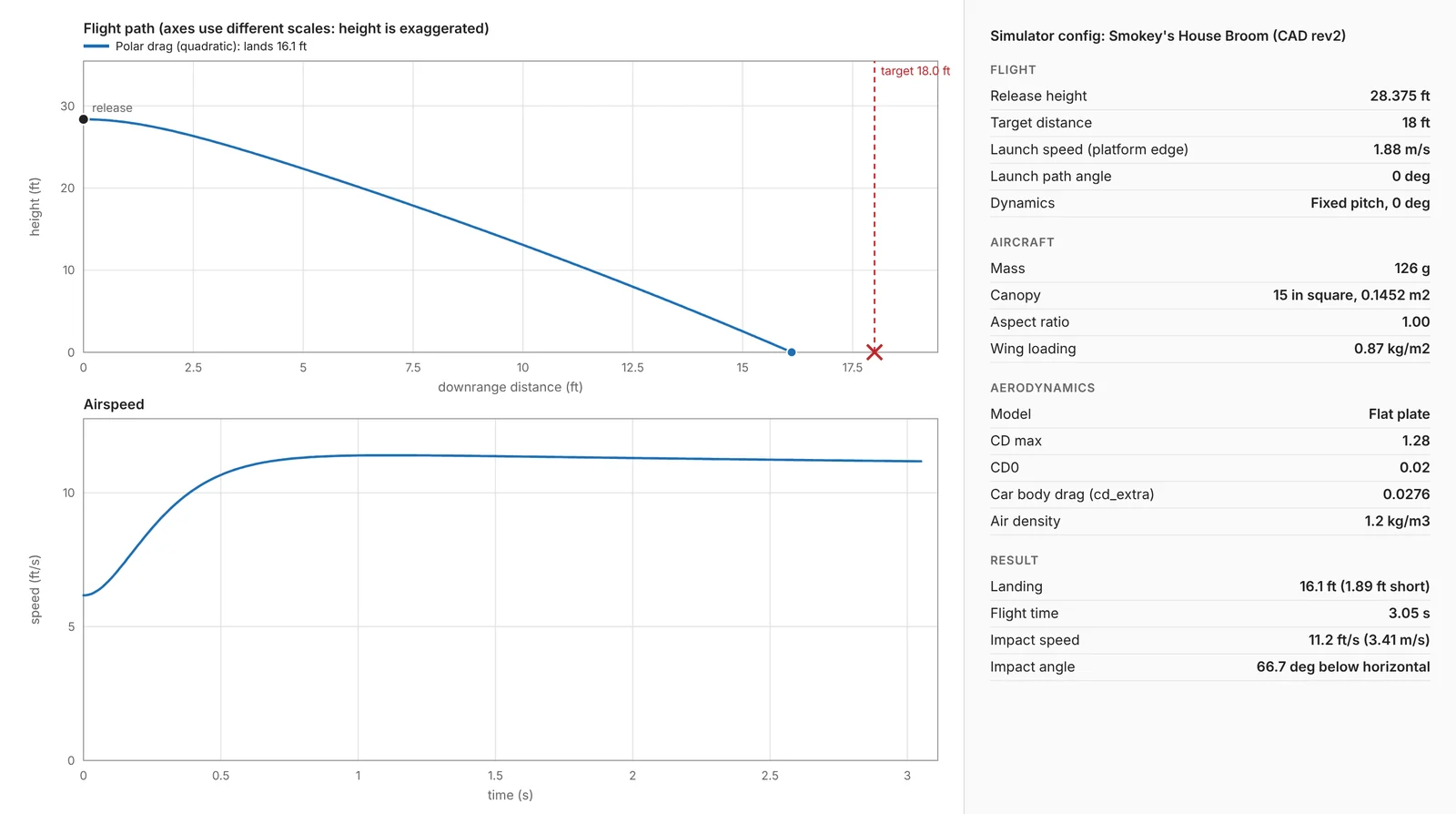
I led the design and aerodynamics and did a lot of the team coordination. To predict where the glider would land before we built anything, we used models of the mousetrap’s launch speed and the glide path. I also put together a custom flight simulator with the help of AI tools: give it the glider’s size, weight, and drag, and it estimates where the glider will land and how fast it will be going. I also built one of our weighted decision matrices and made the slides for our design certification hearing.

The prototype is built and the cart now drives under its own power, so we’ve started in-person testing. The models rely on simplifying assumptions, so real runs are how we’ll tune it.
First powered run: the mousetrap drives the cart down our test runway.
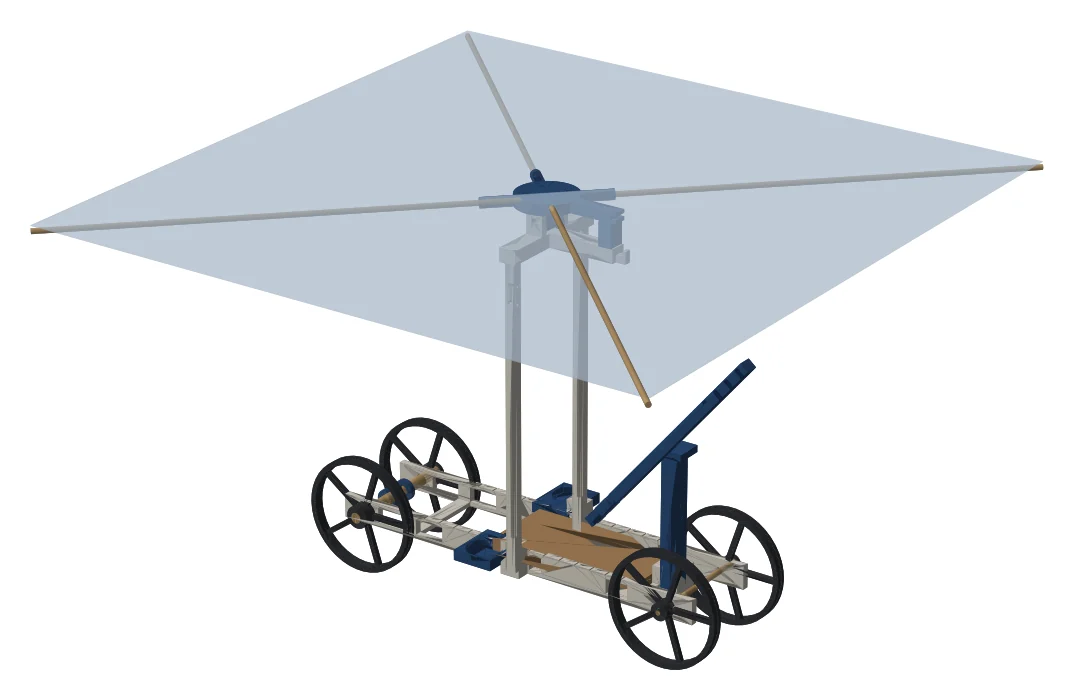
CAD render of the glider: a wheeled cart with a mousetrap and a large square canopy wing on a mast
Our CAD model: the mousetrap drives the wheels, and the canopy above provides lift and drag.
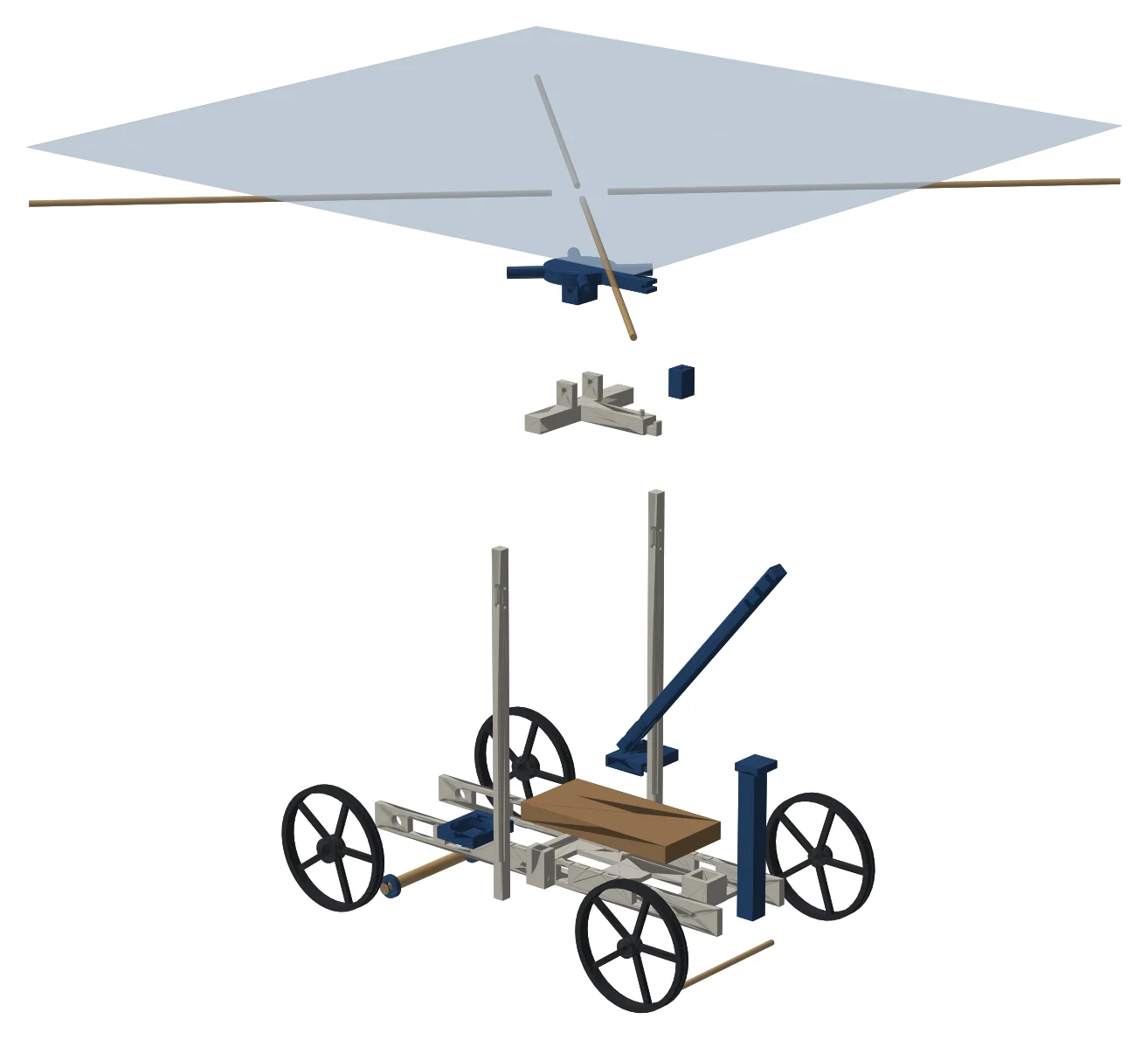
Exploded CAD view of the glider showing the canopy, mast hardware, and cart separated
Exploded view of the cart, mast, and canopy.
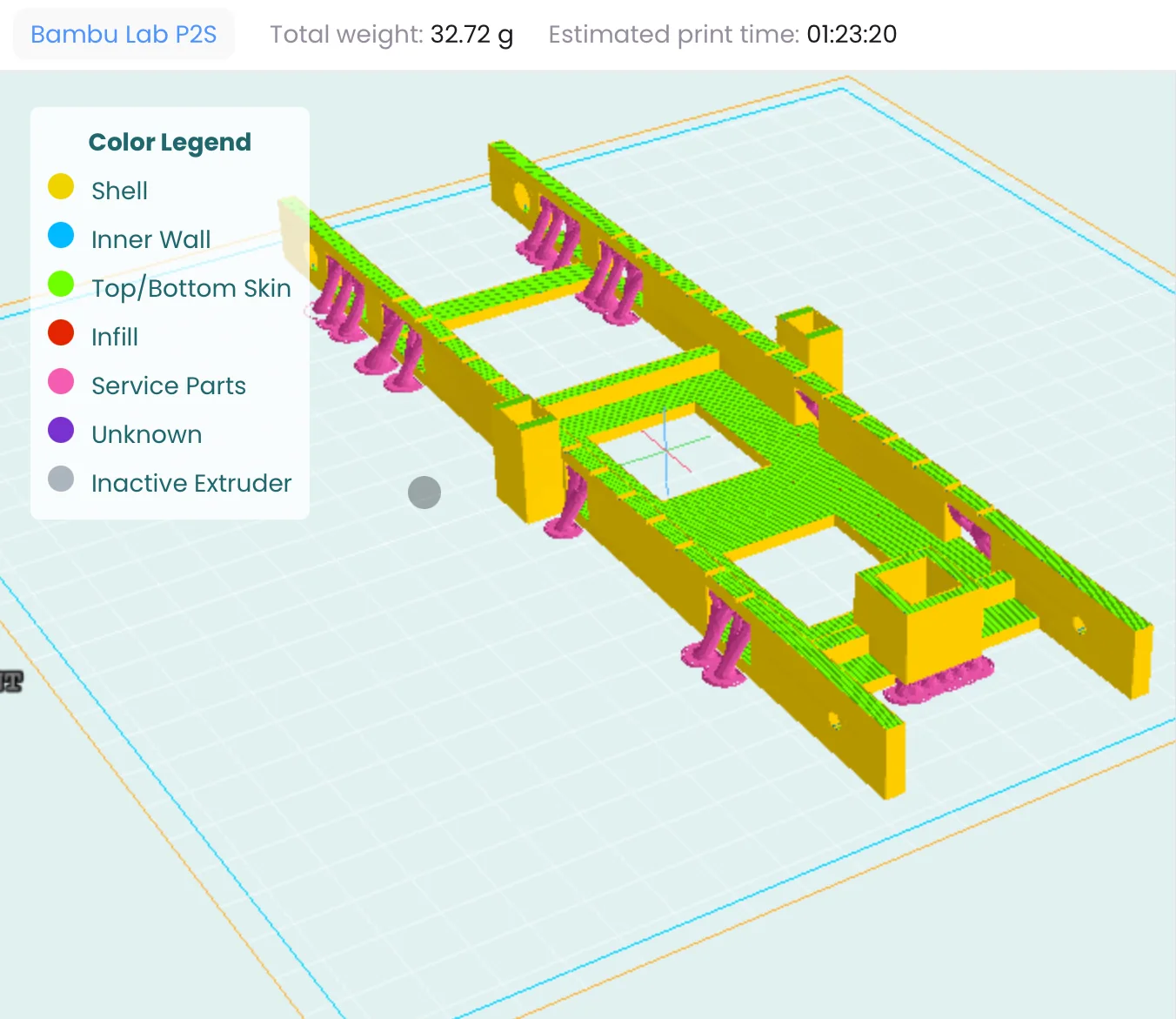
Slicer preview of the 3D-printed chassis on a Bambu Lab P2S: 32.72 g, about 1 hour 23 minutes
Slicing the chassis for 3D printing in PLA: 32.7 g and under an hour and a half to print.
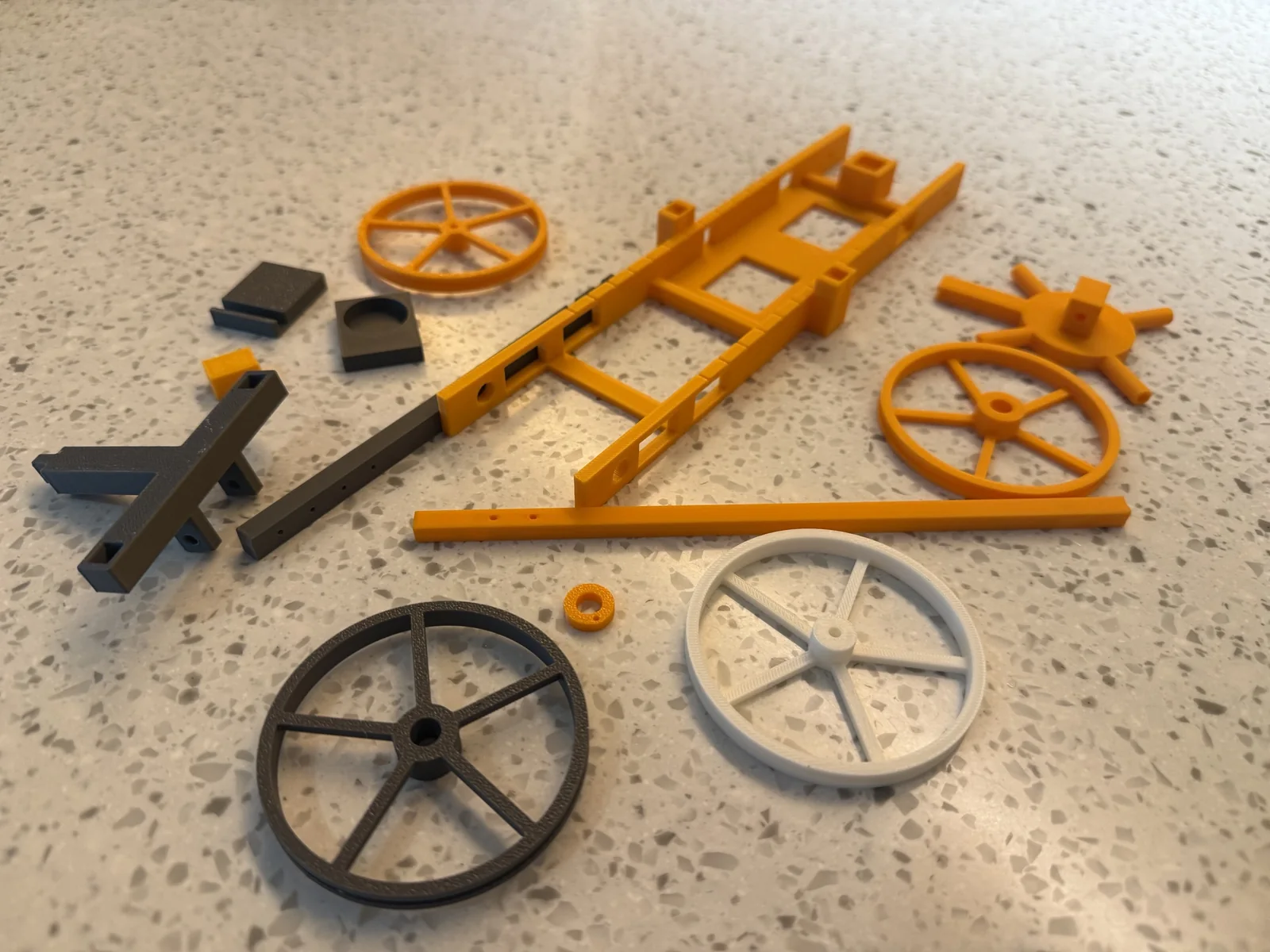
The 3D-printed glider parts laid out on a countertop: an orange chassis frame, spoked wheels in orange, gray, and white, mast sections, and small mounting pieces
The actual printed parts, laid out before assembly.
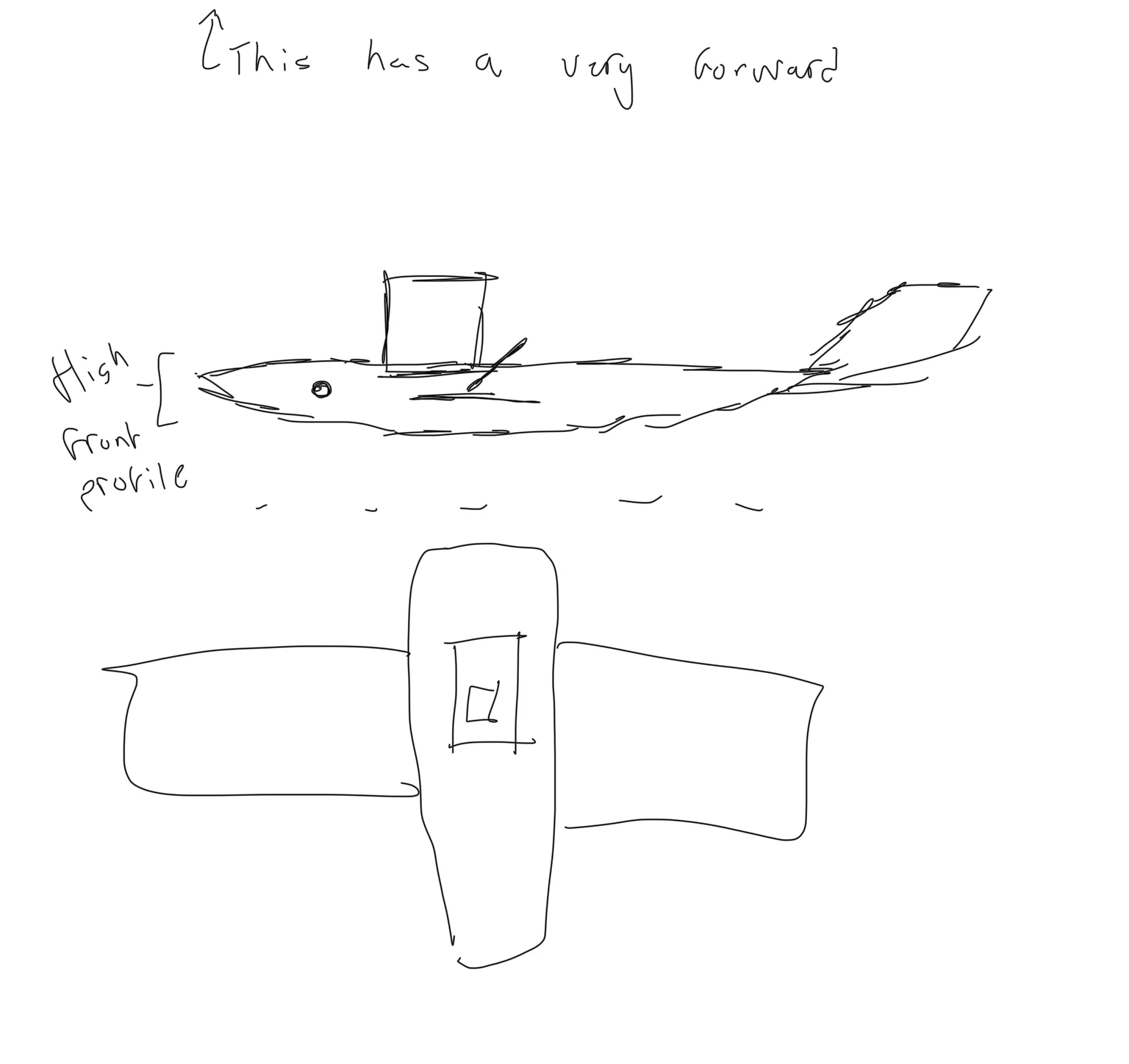
Hand sketch of an early glider concept in side and top view
One of our early concept sketches.
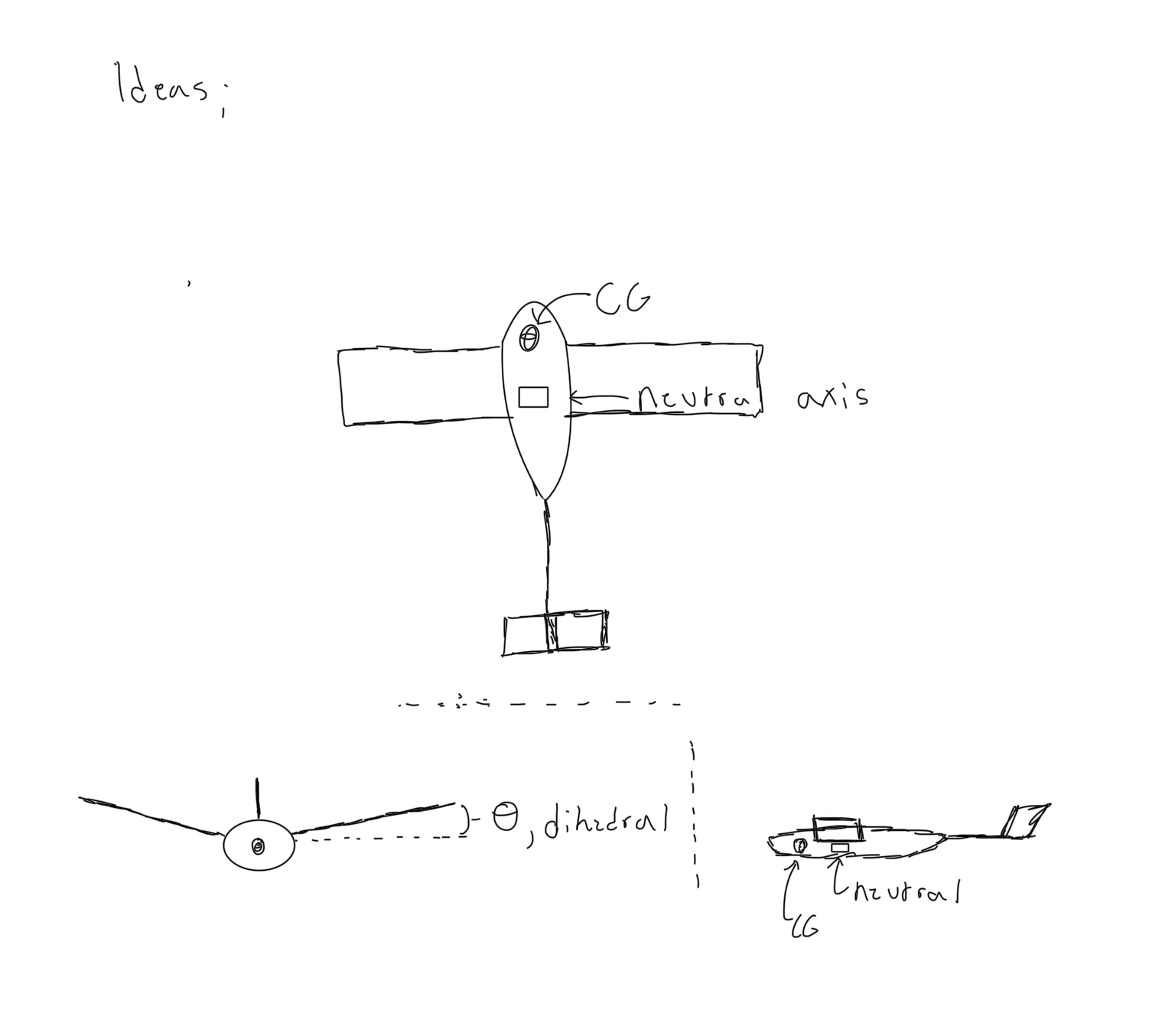
Hand sketch marking the center of gravity, neutral axis, and dihedral of a glider concept
Sketching the center of gravity, neutral axis, and dihedral.
Flight simulator output: predicted glide path from a 28-foot release and airspeed over time, with the glider's parameters listed
Flight simulator prediction for an earlier version of the design, which came up just short of the 18-foot target. Results like this guide our adjustments.
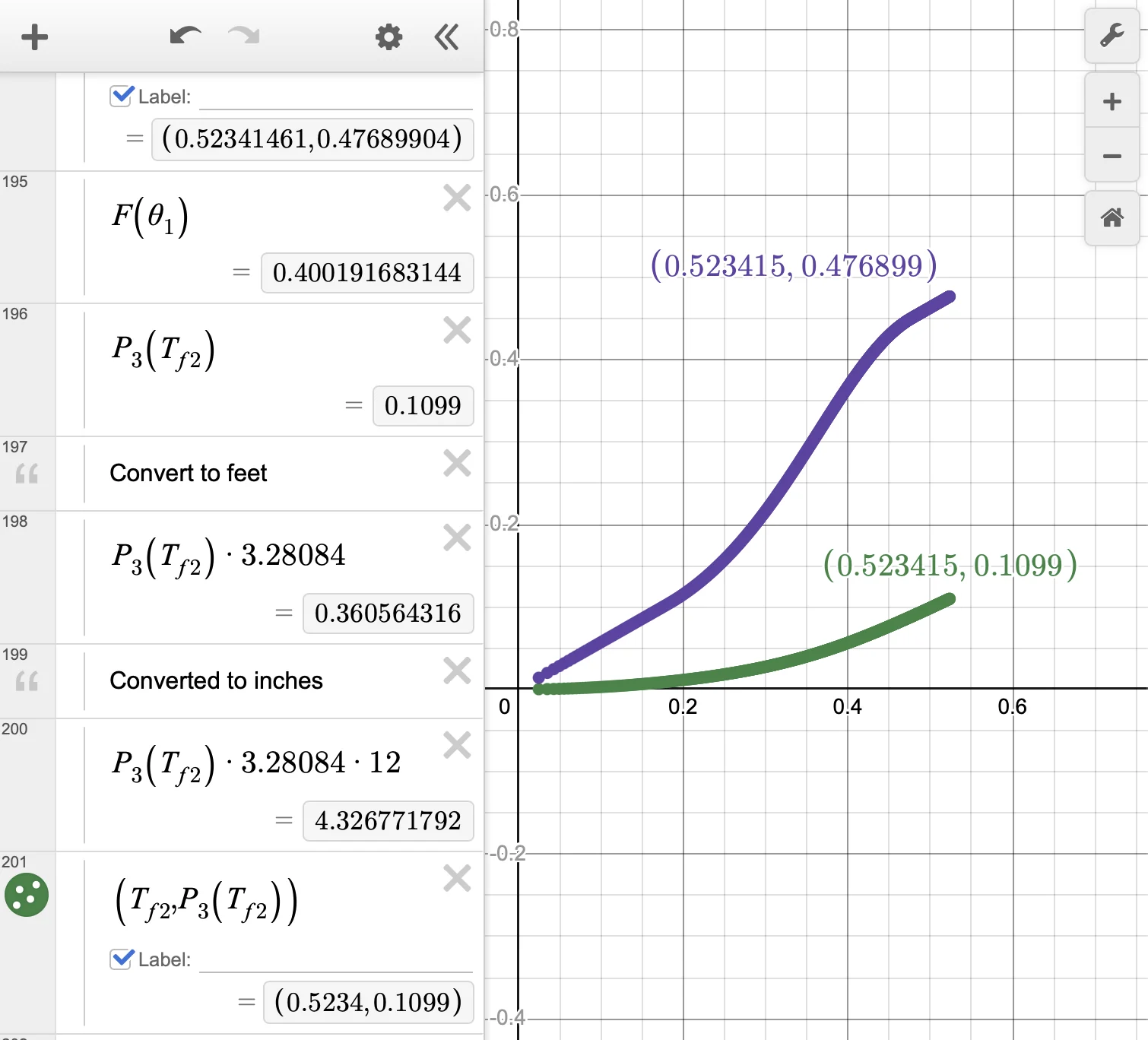
Desmos graph modeling the mousetrap's force and the cart's launch speed
Predictive model of the mousetrap’s launch speed.
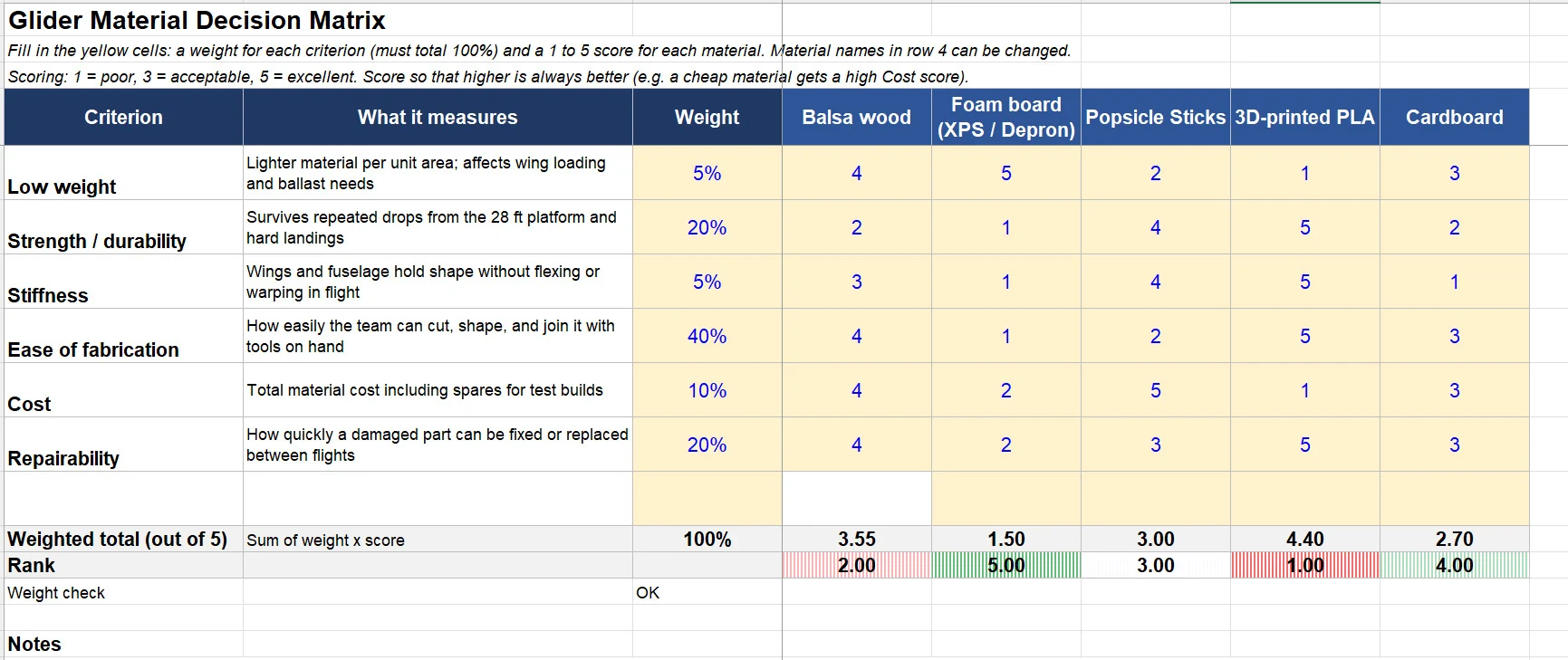
Weighted decision matrix comparing balsa, foam board, popsicle sticks, 3D-printed PLA, and cardboard
Weighted decision matrix for materials: 3D-printed PLA scored highest for strength, ease of fabrication, and repairability.
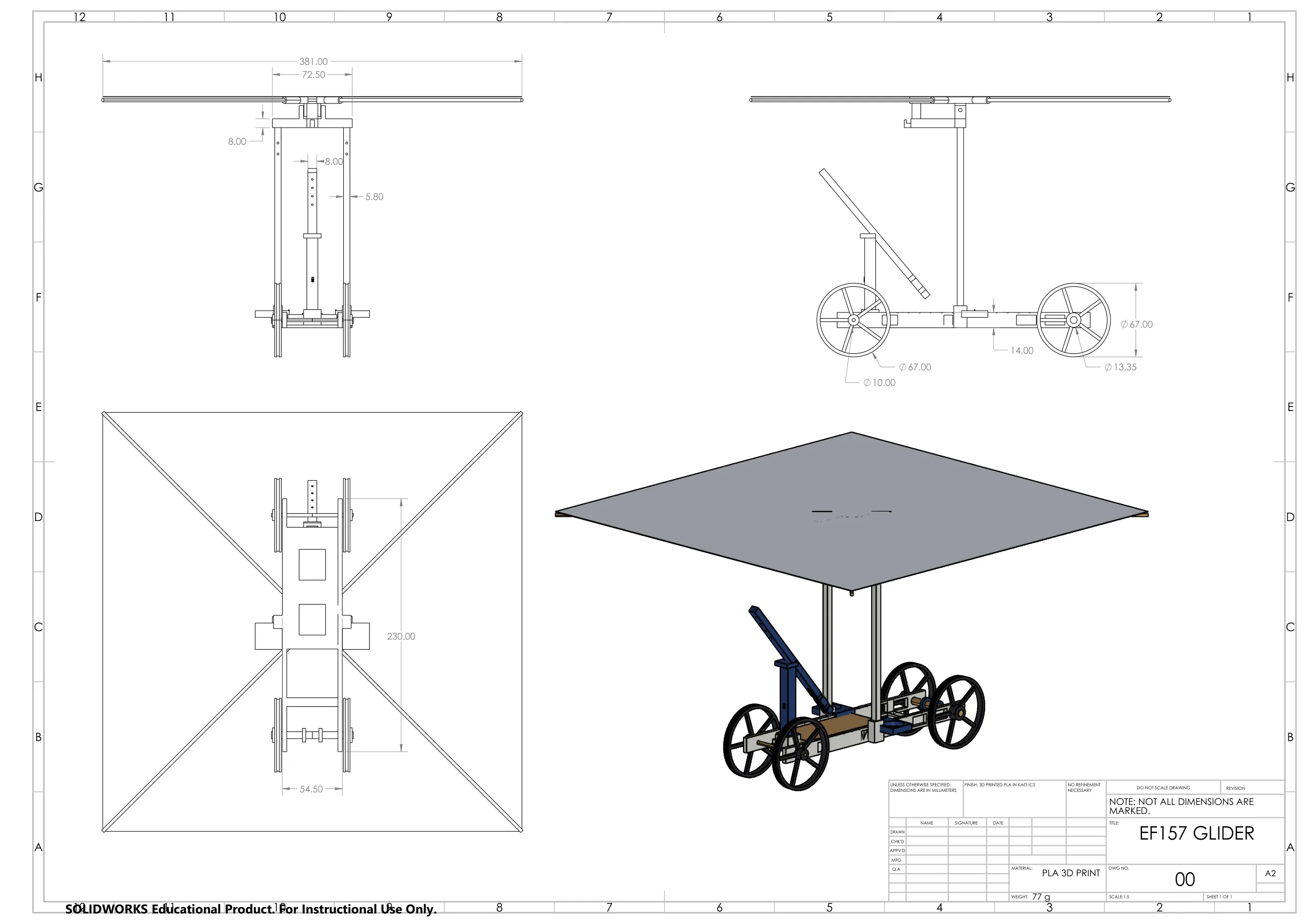
SolidWorks assembly drawing of the glider: front, side, and top views with dimensions, plus a shaded isometric view
SolidWorks assembly drawing. Download the PDF.

Back to the homepage